Barrett's Cove: The Heart of Climbing in the Camden Hills
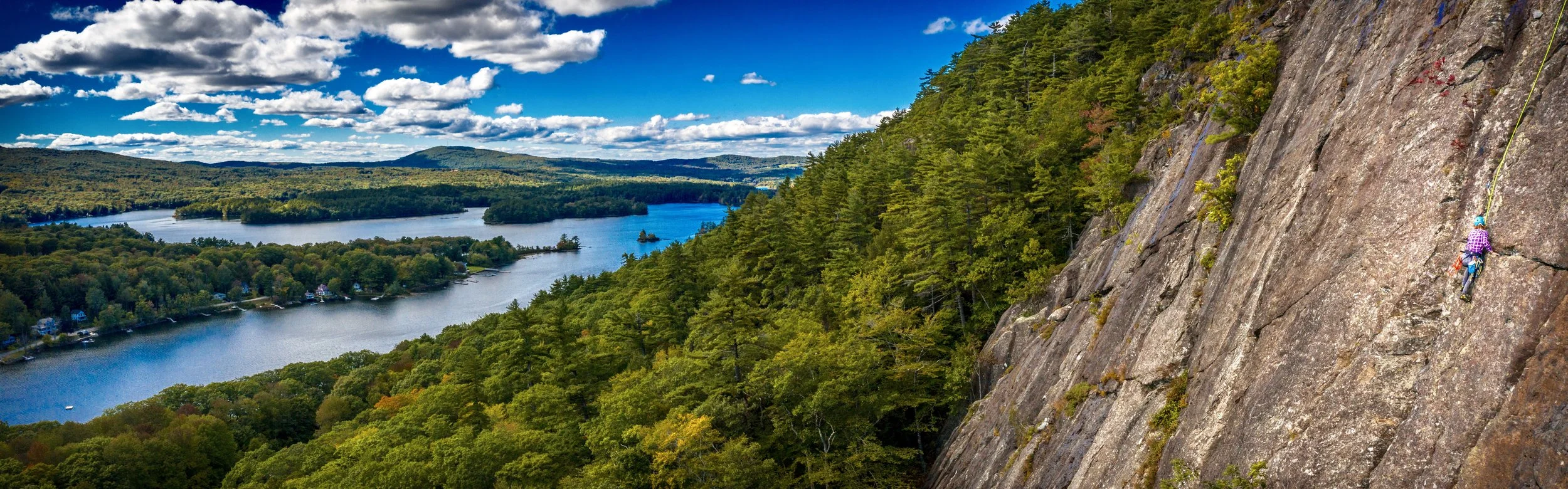
If there’s one cliff that defines climbing in the Camden Hills, it’s Barrett’s Cove.Barrett’s Cove Climbing Guide
By Noah Kleiner
Introduction
Long before I became a guide, before I started Equinox Guiding Service, and before I ever imagined writing this guidebook, Barrett’s was already shaping generations of Maine climbers. It’s where people came to learn traditional climbing, test themselves on classic cracks, and discover what makes climbing in Camden so special.
Over the past decade, I’ve spent countless days on these walls. I’ve introduced families to outdoor climbing, taught children to tie into a rope for the first time, instructed AMGA courses, mentored future climbing guides, and watched experienced climbers push themselves on routes they’ve dreamed about for years. I’ve climbed here with close friends after work and returned simply because, no matter how many times I visit, Barrett’s always has something new to teach me.
From the road, the cliff doesn’t look particularly imposing. It rises above Route 52, overlooking Megunticook Lake. Once you’re beneath the rock, though, the variety becomes obvious. Moderate slabs sit beside crack systems, technical faces, roofs, and routes that continue above the broad shelf of Broadway. In winter, thin ice and mixed lines transform many of the same features.
The rock rewards attention. The metamorphic stone, described in the Camden guide as schist or gneiss, has subtle edges, pockets, and irregular features that can be hard to see from below. Climbers who learn to trust their feet here often discover they can move far more confidently than they expected.
More than anything else, Barrett’s is a place that teaches. It teaches patience, thoughtful protection, and the confidence that comes from making good decisions when the climbing asks a little more of you. Looking back, I can honestly say Barrett’s has made me a better climber, a better guide, and a better teacher. That’s why this cliff means so much to me.
This guide follows the cliff from its quieter left-hand slabs through Charlotte’s, the Main Face, and Belay Seat, with the winter routes alongside the rock terrain they share. It is meant to help you understand the place as well as choose a climb.
The History of Barrett’s Cove
The history of climbing in Camden has survived unevenly. Some routes have documented first ascents; others have names and descriptions but little record of who first climbed them. That is part of the story, too. A blank space in the record is better left open than filled with a good-sounding explanation.
Ben Townsend and Alan Rees’ Camden Climbing preserves an important account of the area’s development. Its historical overview describes climbing in the Camden Hills as early as the late 1940s, with George Smith active in the early 1960s. Peter Metcalf and Paul Ross also explored the Camden cliffs. Those are parts of the wider Camden story, rather than evidence that any one of them established a particular Barrett’s route.
The guide describes another period of activity in the early 1970s, when climbers from the Bangor area, including John Leonard, Ken Clark, and Michael Opuda, visited Camden and explored exposed face climbing. Local climbers were also working through the more obvious cracks and chimneys.
Winter climbing deserves a central place in this history. The guide identifies Geoff Heath’s arrival in the mid-1970s as especially influential. With partners including Dave Getchell Sr. and Dave Getchell Jr., Heath climbed many of the difficult ice flows at Maiden Cliff and Barrett’s Cove. Standing beneath the thin winter lines here gives that account a very different weight than simply reading a list of names.
The route record also preserves more specific contributions. The Camden draft credits Jerry Cinnamon with Old Spice, Ben Townsend with Clamdigger Crack, Ryan Howes with Young Stud and Floral Morals, and Alan Rees, Ben Townsend, and Dorcas Miller with The Bad Route. These credits connect familiar climbs to the people who helped develop them without pretending that every detail of their first ascents is known.
For me, the more recent history is personal. When I founded Equinox Guiding Service, I wanted to build something rooted in the Camden community. Barrett’s became our classroom. Families, school groups, aspiring guides, and visiting climbers have all become part of my relationship with this place.
The cliff still carries evidence of earlier climbing, most visibly in the piton-scarred crack at the beginning of Charlotte’s. Equipment has changed, but the questions remain familiar: Where does the line go? What will protect it? Is this the right route for us today?
Why Barrett’s Matters
Barrett’s brings a remarkable amount of climbing together close to town. The cliff is about 250 feet high, and the approach is short enough for an after-work visit. Yet continuing above Broadway can turn a familiar afternoon into a much bigger outing.
That range is what makes the place useful to a community. A first-time climber can work on footwork near Sidewalk Ledge while an experienced team explores an upper pitch or a thinly protected face. People return with different partners, more experience, and new questions. The same cliff keeps giving them somewhere to go.
I’ve watched children return as confident climbers, former students become guides, and visiting climbers become friends. Those experiences matter as much to me as the hardest route on the wall.
Barrett’s has also taught me to take protection seriously on moderate ground. A flared crack may require more thought than its grade suggests. An easy section may be the least protected part of a route. Learning to pause, evaluate a placement, and decide whether to continue is part of learning to climb here.
That is why I keep coming back. There is always another sequence to notice, another pitch above a familiar ledge, or another way to teach something I once struggled to understand myself.
Getting There and the Approach
From the junction of Routes 1 and 52 in Camden, follow Route 52 north for approximately 2.7 miles. Barrett’s is above the road near the town beach on Megunticook Lake. The established approach begins at the paved roadside pull-off beneath the cliff. Follow posted parking directions and leave room for other visitors.
The climbers’ path rises from roughly the middle to upper part of the pull-off. Allow about ten to fifteen minutes to reach the main cliff, depending on your destination and what you are carrying. The path is short but steep and uneven in places.
The left branch serves Sidewalk Ledge and Charlotte’s, with travel left along the base toward Solstice, the Big Overhang, and Old Spice. The right branch leads toward the Main Face and Heathrow. Upper Charlotte’s and the Upper Main Face are elevated climbing areas reached through the cliff’s climbing and ledge systems; they are not simply stops along an ordinary walk beneath the wall.
For Obscure Gully, continue left along the base and turn up the loose gully before reaching the stream. Jerry’s Wall is farther toward the stream-bed approach on the left. The Lower Right Side has a separate approach through the woods beneath that end of the cliff.
In my local approach notes, the newer Ben and Dorcas wall area is reached from the lower-right end of the pull-off, following the path uphill toward the large boulders. It is a separate destination from the older Belay Seat routes described here; identify your intended wall before following a branch through the talus.
Moving Around the Cliff and Getting Down
Broadway is the shelf dividing much of the lower and upper cliff. It makes combinations possible, but moving along it can involve exposed ground. In particular, the gap between Upper Charlotte’s and the Upper Main Face calls for a belayed crossing.
Plan the descent for the actual route and anchor you intend to use. Pitch length is not the same as rappel distance, and some descriptions in the historical draft disagree about lengths or rope requirements. A single 60- or 70-meter rope does not automatically reach the ground from Broadway or from every upper anchor. Do not rely on rope stretch or downclimbing to compensate for a short rappel.
The historical guide describes staged rappels, as well as a walk-off on the left side of the cliff. Identify the descent before committing, check that the ropes reach the intended landing, and secure the rope ends. Fixed anchors and tree stations described below are locations recorded in the guides, not assurances about their present condition.
For current notices, consult Camden Hills State Park conditions and activities and signs at the site. Access information changes more quickly than a route description.
Climbing Through the Seasons
One of my favorite times to climb at Barrett’s is early spring. After a Maine winter, getting back onto dry rock feels wonderful. Before the trees leaf out, the views are open and the cool air makes the movement feel crisp. But spring also means thawing ground, seepage, and the possibility of falling ice from higher on the cliff. Dry rock at the base does not tell you what is happening overhead.
Summer requires a little more thought about where to spend the day. Barrett’s faces southeast, and the dark rock can become hot. I’ve found that choosing the right section and time of day makes a real difference, especially when guiding a group.
The cliff dries unevenly. Sunny, exposed sections can become climbable while shaded corners and the right-hand drainage lines remain damp. The older guides describe Barrett’s as slow to dry overall, and Buffy is specifically noted as one of the last routes to dry. My experience of finding usable rock after rain fits within that larger picture: look at the route you intend to climb, not just the weather above the parking lot.
Autumn brings cooler temperatures and the changing hardwoods around the lake. It is a wonderful time to explore the longer routes, although leaves can hide parts of the approach and descent paths.
Winter reveals another Barrett’s entirely. Some ice lines appear relatively often; others need an unusual combination of water and cold. The southeast exposure can change conditions quickly. Thin ice may offer little protection even when the movement is technically moderate, and rock gear is an essential part of many historical descriptions.
I like that the cliff asks different questions in different seasons. The important thing is to answer the questions the conditions are asking today.
Understanding the Route Descriptions
The main grades below follow the Camden guide draft. Where the March 2026 Mountain Project listing records a meaningful difference, that difference is identified rather than silently substituted. Route lengths are approximate historical measurements; uncertain totals have not been turned into precise promises.
Trad means that the route relies on removable protection. Some of these routes also have bolts. A bolt or two does not make a climb a sport route, and an unqualified grade does not guarantee close protection. PG13, R, and X identify increasing seriousness of protection or fall consequences; read those alongside the technical grade. The older winter descriptions use NEI for ice grades and M for mixed climbing.
The personal reflections throughout this chapter describe what I value about Barrett’s. They are separate from first-ascent credits and technical details. A route can matter to the story of the cliff without being a sensible objective for every climber.
The Far Left and Obscure Gully
Most climbers arriving at Barrett’s naturally gravitate toward Sidewalk Ledge and Charlotte’s Crack. I understand why. Before you get there, though, the far left offers a quieter introduction to the cliff.
Obscure Gully contains two compact routes tucked above the loose approach gully. Nearby, Old Spice Slab holds a collection of moderate and harder lines with very different protection. This is a good place to begin understanding why the climbing grade tells only part of the story at Barrett’s.
Objectively Obscure
5.8- | Approximately 45 feet | Trad
Climb the initial fifteen feet to a small vertical seam, then use features on the left arête to reach easier ground. The finish trends up and right. The Camden draft lists a light rack to two inches, but its note about the shared anchor is unresolved, so identify the actual station rather than assuming an exact arrangement.
It is a small route with enough variety to reward a visit while you are exploring this end of the cliff. Sometimes the pleasure of Barrett’s is finding a worthwhile pitch in a corner you have walked past for years.
Obscure Object of Desire
5.10c | Approximately 40 feet | Face climbing with bolts and gear
A right-leaning flake leads to thin face climbing near the top of the gully. The useful pockets and edges can be difficult to find, making precision more valuable than simply pulling harder. The draft records two bolts and a light rack.
This little face offers a different kind of puzzle from the moderate cracks nearby. Small adjustments in body position and foot placement matter, and the short length does not leave much room to ignore them.
Noah’s take: Looking carefully is a climbing skill. This is the kind of route that makes you practice it.
Old Spice Slab
A short distance right of Obscure Gully, a narrow slab gathers several distinct climbs into a small area. They share rock and sometimes holds, but their protection changes the experience substantially.
The historical approach to the upper anchor involves exposed scrambling from the gully. Treat it as exposed terrain, even if the moves look easy. The source describes a common anchor area, but that is not a reason to assume every rope setup or descent will be identical.
Sometimes a Great Notion
5.8 to 5.10 | R/X if led | Approximately 80 feet | Primarily top rope
The far-left side of the slab offers a range of movement depending on the line chosen. Although the guide records that it has been led, it discourages leading because of long runouts, tiny gear, and awkward placements. A directional may be needed for the top-rope arrangement.
There is plenty of value in enjoying the movement from above. Documenting a lead does not turn it into a recommendation for the next person.
Old Spice
5.6 R | Approximately 85 feet | Trad
Old Spice follows the natural line up the right side of the narrow slab. The climbing is moderate, but protection becomes sparse higher on the route. The Camden draft credits Jerry Cinnamon with the first ascent and calls particular attention to the upper runout.
This is one of the routes that gives the slab its identity. You can have the ability to climb the moves and still need to think carefully about whether you want to lead them. That distinction is central to Barrett’s.
I like the way a route like Old Spice makes you slow down and look at your feet. I also think it deserves to be described honestly: it is not a casual first trad lead simply because it says 5.6.
Noah’s take: Moderate climbing and real commitment can live on the same pitch. Old Spice is a clear example.
Young Stud
5.8 in the Camden draft | Approximately 85 feet | Trad
Young Stud follows discontinuous cracks and seams on the left side of the slab. It shares a few holds with Old Spice but is recorded as a separate, better-protected line. The draft credits Ryan Howes and describes an optional second pitch of approximately 85 feet at 5.4.
The March 2026 Mountain Project listing lists the route at 5.6 PG13, a substantial difference from the draft’s 5.8. That disagreement is worth knowing before choosing the route; better protected than Old Spice does not mean uniformly protected.
Old Spud
5.8 in the Camden draft | Trad variation
Begin in the narrow corner immediately right of the slab and join Old Spice after approximately twenty-five feet. The draft specifically notes tricky gear in that opening section.
The March 2026 Mountain Project listing uses 5.9 PG13. Whichever grade feels right to you, the practical issue is recognizing and placing protection in the corner, followed by understanding the route you have joined above.
Old Stud and New Stud
Old Stud 5.10a | New Stud 5.10c in the draft’s description | Bolts and gear
The bolted face on the right side of the slab offers two finishes. After the first two bolts, stepping left to join Old Spice gives Old Stud at 5.10a. Continuing directly while staying right of the third bolt gives New Stud, described as 5.10c in the route text.
These lines bring technical face movement to the same wall as the more natural crack-and-seam routes. The source contains conflicting notes about the first-ascent attribution, so no first-ascent credit is assigned here.
Floral Morals
5.7+ | Approximately 85 feet | Trad
The corner immediately right of the bolted face looks less inviting than the climbing it contains. Stem through the initial corner to the ledge near a hemlock, then step left into the left-leaning crack leading toward the anchor. The draft credits Ryan Howes with the first ascent.
This is a useful reminder not to judge every Maine route from the ground. The dirty-looking start is only one part of the pitch, and stemming changes how it climbs.
Noah’s take: If you always choose the cleanest-looking strip of stone, you miss some of the interest at Barrett’s.
Arizona Highways and the Big Overhang
Leaving Old Spice behind, the cliff broadens into slabs, corners, and a headwall above a substantial ledge. Farther right, the Big Overhang becomes the obvious landmark.
This section has a wider range of climbing than a quick walk beneath it suggests. Becky-Joy and Buffy work up the lower slab. Hotel California continues through steeper terrain. Equinox follows its own moderate line near the big roof. Winter adds another route called Arizona Highways, distinct from the rock pitch through the headwall.
The headwall can take time to dry, and the guide notes poison ivy around its base. Give the conditions as much attention as the grade.
Becky-Joy
5.8+ in the Camden draft | Approximately 100 feet | Trad with bolts
The left side of the slab begins with relatively easy climbing toward the birches. Above them, the route changes character, climbing a steeper face past two recorded bolts to the tree ledge. The lower slab alone is described at about 5.3; that does not describe the difficulty of the complete pitch.
The March 2026 Mountain Project listing lists Becky-Joy at 5.9. The useful distinction for planning is between the easy beginning and the harder upper face. The draft records a shared anchor with Buffy.
Arizona Highways in Winter
NEI 3+ | Approximately 150 feet for the principal line | Ice
The winter line starts on the slab, often with thin ice, before narrowing into a steeper gully. The source also describes optional NEI 4 columns above and a harder start from the right, using the narrow chimney near Equinox to join the regular line.
Winter changes the shape and continuity of the route. A photograph from a good year is not a promise about how the slab, gully, or upper columns will connect when you arrive.
Buffy
5.7+ in the Camden draft | Approximately 100 feet | Trad
Buffy follows the flared vertical crack through the middle of the Arizona Highways slab. After the lower-angle section, a short, steep crack and flake provide the finish. The source describes it as one of the last routes on the cliff to dry.
The March 2026 Mountain Project listing uses 5.7. More significant than that small grade difference is the condition of the route. Give it time after rain, and distinguish an unappealing appearance from genuinely wet climbing.
Hotel California
5.10b | Three described pitches | Trad
Hotel California turns this part of the cliff into a longer outing. The source credits Ben Townsend, Alan Rees, and Dorcas Miller. Its lower pitch can stand alone, while the upper climbing becomes much steeper.
The first pitch begins left of the large roof. Climb the left side of the low-angle chimney, then stem right onto the upper face to the anchor. The draft gives this approximately 115-foot pitch 5.6 and describes it as one of the better easy leads on the cliff.
For the second pitch, reposition the belay toward the base of the steep wall. A short vertical crack leads to the next ledge at 5.9+, approximately twenty-five feet. The third pitch climbs the steep corner and broken crack system at the back of that ledge, finishing through an overhang at 5.10b, approximately thirty feet. The two upper pitches can be combined with appropriate rope management.
The progression is part of the appeal. The moderate beginning does not prepare the eye for everything above it, and continuing gives the route a very different character from a quick lower-slab session.
Noah’s take: There is more here than the first pitch. Choose the full route when you want the steeper climbing as well as the approach to it.
Equinox
5.5 | Approximately 90 feet | Trad
Equinox begins left of the large roof, sharing the initial area with Hotel California. Step right across the chimney toward the distinctive pea-pod crack, then follow the line trending right.
This route matters to me for a reason that goes beyond its grade. Equinox Guiding Service is named after it. I think of it as a bold route, and as a good expression of what makes climbing at Barrett’s distinctive: moderate movement that still asks for thought and commitment.
The draft does not attach an R rating to Equinox, so I am not adding one. My description of it as bold is my own perspective on the experience, rather than a change to the historical grade.
When I talk about what I want people to learn through guiding, I come back to the same ideas: move thoughtfully, pay attention to protection, and make decisions you understand. That is why this climb belongs in the story of the company as well as the route list.
Noah’s take: People ask where the name came from. It came from this climb, and from the kind of climbing I value here.
Jerry’s Exit Variation
5.7 | Approximately 50 feet | Trad
This is an alternative to the final overhang of Hotel California. Traverse right along the sloping ledge and exit through a left-facing corner. The draft describes it as reasonably protected but unusually awkward for the grade.
It offers a different finish through the headwall, rather than an independent route from the ground. Understand where the variation begins before treating its moderate grade as an easy way out of every position on Hotel California.
Yuma
5.9 A0 | Approximately 50 feet | Trad and aid
Yuma takes the awkward overhanging hand crack through the lower roof. The approach described in the guide uses the gear belay above the low-angle corner, as for the Arizona Highways headwall route.
The A0 is part of the documented grade. It should not disappear simply because the rock climbing number looks familiar. The draft calls for a rack to three inches with extra one-inch pieces, while leaving the exact anchor-sharing note uncertain.
Arizona Highways on Rock
5.9+ | Approximately 40 feet for the headwall pitch | Trad with a bolt
Approach by the first pitch of Hotel California, then move the belay to the next ledge on the right. From there, a crack-and-corner system leads through the large overhang. The forty-foot length refers to this upper pitch, not the full outing from the ground.
This is the rock route bearing the Arizona Highways name. Keeping it separate from the winter slab-and-gully description makes this section of the cliff much easier to understand.
Overhanging Finger Crack Variation
5.11 | Approximately 40 feet | Rock
The obvious steep finger crack lies a few feet right of the Arizona Highways overhang. The historical description is brief, and does not provide a reliable protection or anchor specification. The distinctive crack identifies the line; it does not supply missing details about how to climb or descend it.
The Big Overhang
The next major feature is a roof roughly fifty feet across above a mossy slab. Its routes involve steep climbing and traverses, with consequences for both leader and follower. Think about the full rope path, especially where a follower could swing beneath the roof.
Itchy Balls
5.12a in the Camden draft | Roof climbing
This direct line climbs through the middle of the roof and joins Weed-O-Dendron above. The draft’s hardware notes are incomplete, so an exact bolt count is not given here.
The important distinction is its direct passage through the steep ground. It is a different proposition from working around the right end and traversing left on Weed-O-Dendron.
Weed-O-Dendron
5.10b | Bolts and gear
Begin at the far-right end of the overhang, climb the corner, and clear the roof by moving left. The traverse is the crux. Above it, continue left and then arc upward on easier slab climbing toward the shared upper anchor area.
The draft emphasizes the possibility of a substantial follower pendulum at the traverse. This is a route where the belay and rope system deserve attention before the leader starts climbing. The source also records a direct roof variation at about 5.12; it should not be confused with the regular 5.10b line.
Noah’s take: The interesting problem here includes getting both climbers through the traverse. Reaching the anchor is only part of the lead.
Solstice Gully
Right of the Big Overhang, the cliff breaks into gullies and slabs leading toward Broadway and the upper wall. Spawn occupies the neighboring gully, while Pandora and the winter Solstice routes use the next drainage.
This is where the summer and winter versions of Barrett’s begin to feel especially different. A gully that a rock climber uses to locate a face route becomes the beginning of a much more committing winter line.
Spawn
5.7+ | Two pitches | Trad
Spawn begins in the gully right of the large overhang. The first pitch climbs its left side, using a short ramp, corner, and crack to reach a grassy ledge and recorded bolt anchor. The draft gives this first pitch approximately 100 feet; it does not give a dependable total length for the entire route.
The second pitch steps right into a crack-and-corner system, negotiates an awkward bulge, then uses the last bolt of Weed-O-Dendron before traversing right and face climbing to the shared upper station. The source recommends thin cams as part of the rack and a long sling where the lines intersect.
Spawn is worth keeping distinct from both the roof route and Pandora. It has its own start and progression, even though the upper anchor systems connect neighboring climbs.
Pandora
5.10a by the less direct line | 5.10c directly over the lower bolts | Bolts and gear
Pandora climbs the left wall of the next gully and continues onto the upper slab. It can be divided into two pitches or linked as a longer pitch, with careful attention to rope drag.
The lower section passes three bolts. Staying directly above them makes the climbing harder; stepping left near the first bolt and using the slab’s left edge produces the easier sequence, with difficulty dependent partly on reach. Above the vegetated ledge, move right through the notch to a small ledge on the left, where the draft describes a gear belay.
The upper pitch traverses right onto the slab and continues more directly toward the top. It is given 5.8+ in the source. Broadway provides an intermediate level used in the described descent; it is not the finish of the entire route. The draft’s length notation is inconsistent with its full description, so no total length is asserted here.
This is the kind of climbing where the route is a sequence of decisions rather than a single obvious crack. Read the slab, manage the rope, and keep track of the terrain you are linking together.
Noah’s take: Pandora asks you to pay attention throughout. That is a large part of its appeal.
Solstice Wall
M4 X on the upper wall | NEI 3 approach gully | Ice and mixed
The first pitch follows the winter gully to the left end of Broadway near the Pandora Freeway station. In suitable conditions, it provides access to the upper terrain. The slab right of the gully can also ice up, with the draft giving that alternative NEI 3+ R.
Above Broadway, climb the chimney for about thirty feet, then traverse left at a horizontal crack onto the thinly iced headwall. The recorded M4 X rating belongs to that very serious upper climbing, where protection may be minimal or absent.
This is a clear example of why a mixed grade alone does not describe a winter route. The continuity and quality of the ice, the traverse, and the consequences of a fall all matter independently of the hardest move.
Solstice Chimney
M3+ | Approximately 180 feet in the draft | Mixed
Solstice Chimney developed as a variation to the upper part of Solstice Wall. The guide describes it as forming more often and offering better protection than the original headwall line.
Above the lower gully, follow the chimney to a chockstone, then step right into a hand-to-fist crack and continue toward a large block. A few rock moves, described at 5.3, lead into a belay alcove with trees. Depending on conditions and rope management, the line may be climbed in one long pitch or broken into shorter sections.
An upper variation traverses left toward a bolt on Pandora before finishing on delicate ice on Solstice Wall. Its M4 R/X rating makes it a materially more serious finish, not a casual extension of the normal chimney.
Noah’s take: This area makes the connection between rock and winter climbing obvious. You keep reading the cracks even while climbing with tools and crampons.
Sidewalk Ledge and Lower Charlotte’s Face
If there is one place at Barrett’s where generations of climbers have learned what Camden climbing feels like, it is Sidewalk Ledge. It is also one of the places I return to most as a guide.
The climbing is concentrated, and the ledge makes it possible to spend time working on movement, protection, and climbing systems. I’ve watched many people discover outdoor climbing on this piece of rock. Welcoming, though, does not mean that every route is an easy lead.
In early spring and late fall, this wall can sometimes be dry, sunny, and sheltered while water runs elsewhere on the cliff. It is also a place where parties regularly share space. Keep ropes organized, communicate about shared anchors, and leave room for other climbers.
Above is Broadway, where the lower routes meet a range of possible upper pitches. Charlotte’s continues as a named two-pitch route, while neighboring lines can be combined in other ways. That flexibility is one reason a familiar part of Barrett’s keeps producing different days.
Frozen Smile
M5 | Approximately 90 feet | Mixed
At the far-left end of the face, the bushy wide crack becomes Frozen Smile in winter. Committing rock and turf climbing leads to a short ice bulge and an exit onto Broadway left of the Pandora Freeway anchor.
The guide describes useful rock protection. This is a mixed route through terrain that may look unremarkable in summer, and its condition depends on more than whether a visible ice bulge has formed.
The Bad Route
5.10 R/X | Approximately 90 feet | Trad
Start near the oak tree just right of the gully, climb through the roof, and continue up the face to the anchor near the start of Pandora Freeway. The final movement resembles the finish of Clamdigger.
The draft credits Alan Rees, Ben Townsend, and Dorcas Miller. It calls for unusually small and specialized protection, including micro nuts, small Tricams, thin cams, and Lowe Balls. Those details belong alongside the R/X rating: this is not a route to select solely because you climb 5.10.
Noah’s take: The protection rating deserves at least as much attention as the climbing grade.
Easy Ramp
5.3 | Trad
From the left side of Sidewalk, traverse upward and right to the tree ledge partway up Charlotte’s first pitch. The ramp provides access to the lower Charlotte’s top-rope position. An awkward chimney continues above toward Broadway, but that continuation should be understood separately from the easy lower ramp.
This is useful terrain for learning the cliff’s layout and practicing movement. Because the route traverses, protecting the follower and managing the rope remain part of the task even on easy ground.
Clamdigger Crack
5.5 | Approximately 90 feet | Trad
Begin on Easy Ramp, then move across the slab toward a small overhang. Follow the left-leaning crack toward the left edge of the face, cross the wider crack, and finish upward toward the Pandora Freeway anchor. The Camden draft credits Ben Townsend with the first ascent.
Clamdigger is one of the routes that defines Sidewalk for me. Its natural features give the climbing direction, and the moderate movement leaves room to think about protection. That makes it useful when discussing how a climber develops judgment on a trad route.
The guide records an intermediate rappel station, but its presence and position should be confirmed as part of the actual descent plan.
Noah’s take: Difficulty is not what makes a climb valuable. Clamdigger gives you a lot to learn from at a moderate grade.
Harmonic Convergence
5.7+ | Approximately 100 feet in the draft | Trad with two recorded bolts
A small crack on the left side of the lower slab leads to a grassy ledge. Work through the bulge, step left toward a flake, then climb the face near the white dike before moving right near the upper vegetation. The source specifically mentions a loose triangular block in the bulge area.
Harmonic changes the problem as you climb. The crack provides an initial line and gear opportunities, then the face asks for balance and more careful reading. The guide’s length and neighboring anchor notes are not sufficient to make a blanket rope-length promise for the descent.
Noah’s take: Clamdigger gives you a crack to follow. Harmonic asks how you move when the crack stops doing all the route-finding for you.
Champagne
5.6 R | Approximately 140 feet in the draft | Trad
Begin on the slab about fifteen feet left of Charlotte’s Crack. Pass a short hand crack and continue toward Broadway. The source associates the finish with the Harmonic Convergence anchor area, but its length and rappel notes are inconsistent enough that the descent needs independent confirmation.
The R rating is the essential companion to the moderate climbing grade. Champagne offers a longer stretch of slab where reading the terrain and staying composed above protection are part of the experience.
Charlotte’s Crack
5.7 | Approximately 250 feet | Two pitches | Trad
If Barrett’s has a signature route, this is it. Charlotte’s brings together face climbing, cracks, variations, and the opportunity to continue from Sidewalk all the way to the top.
Begin at the clean face near the large tree on the right end of Sidewalk. The thin crack bears piton scars, visible evidence of earlier climbing. That physical history is enough to make the route interesting without inventing a first-ascent story the source does not provide.
The initial forty feet climb the face at approximately 5.5 to the tree ledge, avoiding the large detached block noted in the guide. From there, step right into the vertical crack at 5.7. A left-hand arête variation is described at 5.6. The complete first pitch reaches Broadway after approximately 140 feet.
Many parties top-rope only the lower wall, and others stop at Broadway. Both are familiar ways of enjoying Charlotte’s. But the upper pitch changes the experience considerably.
Move along Broadway to the start of the left-leaning wide crack, approximately fifteen feet right of the first-pitch arrival described in the source. Stemming and crack climbing lead to a small roof, followed by face climbing toward the upper station beneath the trees. The draft gives this pitch about 110 feet at 5.7.
Above Broadway, you begin to feel the full height of the cliff and see the lake from a different position. This is what makes Charlotte’s more than a short lower-wall session for me. It gives you the chance to turn familiar climbing into a full outing with your partner.
Noah’s take: I want people to know the whole route is here. The first pitch is popular for good reasons, and the second deserves attention of its own.
Why Sidewalk Ledge Matters
Sidewalk can meet a climber at several stages of learning. Easy Ramp introduces the terrain, Clamdigger gives you a natural line to follow, and Harmonic brings a transition onto the face. Champagne and The Bad Route make the difference between movement grade and protection clear. Charlotte’s connects the lower wall with the upper cliff.
That variety is why I have spent so much time here. You can teach the fundamentals, return with more experience, and still find something that requires care.
Upper Charlotte’s Face
Broadway feels like a natural stopping point. For many parties, it is. But continuing above it is one of the best ways to appreciate the size and variety of Barrett’s.
These routes begin on the ledge, rather than at the base of the cliff. From left to right, the historical sequence is Pandora Freeway, Templeton’s Crack, White Dike, Upper Charlotte’s, Toontown, The Web, and the winter chimney Shoestring. The upper routes have their own approaches and descent requirements; sharing a stretch of cliff does not make their anchors interchangeable.
I enjoy the change in perspective up here. The activity at Sidewalk is farther away, the view opens across the lake, and choosing an upper pitch gives the day a direction beyond simply moving the rope to another lower route.
Pandora Freeway
5.7 | Approximately 100 feet | Trad
Start at the far-left Broadway station above Clamdigger Crack. Follow the diagonally leftward crack system, step left across a small slab, and use the crack beside a chockstone. Continue left into the scoop along the right edge of the Pandora slab, passing a small overhang.
The Camden draft credits Jerry Cinnamon and Ryan Howes. A separate variation continues more directly up blank slab toward the Solstice Chimney tree station at 5.8 R, approximately eighty feet. That variation has a different protection character from the standard line.
Pandora Freeway is distinct from Pandora, which starts below in the gully. Keeping those names and starting points separate makes the left side of Broadway much easier to understand.
Noah’s take: An upper pitch can transform the day. This is one way to keep exploring after arriving on Broadway.
Templeton’s Crack
5.8+ R | Approximately 140 feet in the Camden draft | Trad
Begin near the second station from the left on Broadway. An easier crack leads to a grassy ledge, then a step right gains the slab and thin crack above.
The draft describes protection that can be made reasonably effective by a climber skilled with wires, small Tricams, and small cams, while retaining an R rating. Those two statements belong together. Knowing what might fit is different from finding and placing it while leading.
Templeton’s is a good example of a route whose challenge includes protection and composure. The historical length is retained as an approximate route length, not as a statement about a direct rappel.
White Dike
5.9 | Top rope
Follow the pale dike on the upper face just left of Charlotte’s. The line emphasizes small features and balance rather than following the wider cracks around it.
The draft records White Dike as a top-rope climb, left unbolted by local consensus. It belongs in the guide on those terms. Enjoying a face without turning it into a lead is part of the variety here.
Upper Charlotte’s
5.7 | Approximately 110 feet | Trad
This is the second pitch of Charlotte’s Crack, also useful as an upper-pitch choice after another lower route. Identify the diagonal wide crack from Broadway and establish the belay for that line rather than relying solely on the position of a neighboring anchor.
The crack offers stemming and leads through a small roof before the final face climbing to the upper station. The guide describes good protection along the principal crack system.
I think this pitch deserves to be known as well as the climbing below. The combination of crack movement and position above the lake gives a full Charlotte’s ascent much of its character.
Toontown
5.8+ in the Camden draft | Approximately 100 feet | Slab with bolts and gear
Toontown climbs the thin slab immediately right of Charlotte’s, passing two recorded bolts before finishing through a short headwall at the rappel station. It is a face-and-slab pitch, not a wandering crack route.
The March 2026 Mountain Project listing lists 5.8 R. That protection rating is useful additional context even though the main grade here follows the Camden draft. The bolts are part of the route; they do not establish that all the climbing between them is closely protected.
The Web
5.6 in the Camden draft | Approximately 120 feet | Trad
From the Broadway anchor area beneath the tree, follow the right-leaning crack toward the chimney. The described rock line stays out of the chimney by using the face and arête to its left.
The March 2026 Mountain Project listing gives The Web 5.7. The route’s shape is more useful than either number for identifying it: crack first, then face and arête beside the chimney. It provides another moderate way to experience the upper cliff.
Shoestring
NEI 3 and 5.4 | Approximately 120 feet | Ice and mixed
The narrow chimney right of The Web becomes Shoestring in winter. The guide describes a reasonably protected mixed climb, with both the ice and rock components reflected in its rating.
The formation matters more than a summer impression of the chimney. This is another place where the familiar rock cliff can become a different climbing experience when winter conditions align.
Why Continue Above Broadway
The lower cliff is where many people meet Barrett’s. The upper pitches give that first impression more depth. You climb above the busiest ledges, choose among distinct lines, and take responsibility for the full outing with your partner.
That experience is part of what I want this guide to preserve. There is more to Barrett’s than the same handful of lower pitches, even when those pitches are very good.
Queen Charlotte and the Big Chimney Area
The Big Chimney is a prominent central landmark reached from the right-hand approach branch. Queen Charlotte and Joker climb on its left side. The chimney itself and Cachongas reveal much more of their appeal in winter.
Keeping this area separate from the Lower Main Face helps make sense of the cliff. Poison Ivy begins on the other side of the chimney; it does not belong among the routes around Spawn or Solstice.
Queen Charlotte
5.8 | Approximately 60 feet | One pitch | Trad
Queen Charlotte follows the sharp-edged arête forming the left side of the Big Chimney. Pull through the overhang, then follow easier cracks to the pine-tree station on Charlotte’s.
The sixty-foot pitch finishes at the tree on Charlotte’s. Connections to surrounding terrain are possible, but the original route is complete at that station.
It offers a different approach to a familiar part of the cliff, with the overhang interrupting the more moderate climbing around it. That compact character is worth describing on its own rather than adding another route’s upper pitch to make it sound longer.
Joker
5.10b in the Camden draft | Two pitches of approximately 60 feet each | Trad with bolts
Joker climbs the left wall of the Big Chimney just right of Queen Charlotte. Its first pitch follows the slabby section past two recorded bolts at about 5.8, then traverses right to a stance below the overhanging wall for a gear belay.
The second pitch steps right and climbs the steep wall on positive but fragile-looking flakes, passing two more recorded bolts. Above the steep climbing, slab and broken cracks lead to Broadway, with limited protection noted in the draft. The historical grade for this pitch is 5.10b; the March 2026 Mountain Project listing gives the route 5.9+.
The pitches can be linked, but the guide notes rope drag and difficulty maintaining sight of the leader through the crux. Those are reasons to choose the belay arrangement deliberately, rather than automatically treating a short two-pitch route as a single pitch.
Noah’s take: Joker adds steep climbing to a cliff many people think of primarily as slab. Give the upper wall the attention it deserves, including the rock and protection above the crux.
Big Chimney
NEI 3+ and M5 R in winter | Approximately 5.7 on rock
The Big Chimney is damp and vegetated as a rock climb. In rare winter conditions, ice connects the chimney to the pine-tree level on Charlotte’s. Continuing through the Easy Ramp chimney toward Broadway adds strenuous mixed climbing.
The source’s several grades describe that combination of terrain; they should not be collapsed into a simple moderate ice grade. The rock version is recorded, but winter is what gives this feature much of its interest in the historical guide.
Cachongas
M6 | Approximately 115 feet | Ice and mixed
Cachongas climbs a rarely forming smear leading up and right out of the Big Chimney into a tight, overhanging slot. The guide describes technically difficult climbing with generally useful protection from rock gear and short screws, subject to the actual condition of the ice and placements.
A variation traverses right below the slot and finishes with thin mixed climbing on the slab. That is a distinct exit choice, not the regular passage through the overhanging slot.
This route belongs here between the Big Chimney and the Lower Main Face. Even in a season when it has no visible ice, recording it helps explain what climbers have found in this part of Barrett’s.
Lower Main Face
Just right of the Big Chimney, the Lower Main Face rises from the ground toward Broadway. Much of this section is around 150 to 160 feet high, although individual routes and stopping points vary.
The lines are less immediately obvious than Charlotte’s. Cracks lead into faces, water streaks become route-finding landmarks, and moderate climbing can require careful protection. In winter, Skye Crack, Hollywood Waltz, and Heathrow add thin ice to the same wall.
This is a part of Barrett’s where I want climbers to look beyond the grade. Being able to do the moves and being prepared to lead the route can be different things.
Poison Ivy
5.5 | Approximately 150 feet | Trad
Begin in the flared corner immediately right of the Big Chimney. Follow cracks toward the headwall just left of the small cedar, then continue roughly straight to Broadway and the recorded bolt station.
The Camden draft recommends a standard rack to three inches. The March 2026 Mountain Project listing adds PG13 to the 5.5 grade, useful context for anyone expecting a straightforward beginner lead.
Poison Ivy gives you time to think, but still asks you to use that time. Read the cracks, assess placements, and keep track of the route as the wall changes around you.
Noah’s take: Moderate movement can be a good opportunity to practice judgment. It does not remove the need for it.
Good Omens
5.8 | Approximately 150 feet | Trad with one recorded bolt
A delicate start on the slab follows a small V-shaped corner before passing a bolt. Higher up, pull the roof to the right of the cedar and join Poison Ivy for the final moves to Broadway.
The draft calls for thin cams and Tricams as part of the rack, and describes the beginning as somewhat committing. The March 2026 Mountain Project listing uses PG13. The route moves from small-feature slab climbing into a steeper problem above, giving it a different rhythm from Poison Ivy.
Broken Elevator
5.7 R | Also known as Robert’s Fall | Trad
Follow the left-leaning crack on the wall right of the Big Chimney, then continue on the face past the recorded intermediate station toward Broadway. The source describes a directional at the top before moving to the Poison Ivy belay.
The alternate name has a documented explanation: the Camden draft records that Robert fell to the ground while leading and broke his leg. It does not provide enough information to add a date, reconstruct the gear, or describe a rescue, and those details should not be guessed.
The R rating stands on its own. It is a route where the possible consequences of a fall need to be understood before leaving the ground.
Skye Crack
NEI 3+, 5.4, X | Approximately 160 feet | Ice and mixed
Thin ice leads toward the juniper, then an off-width crack supplies mixed climbing, sometimes with an ice hose in its back. The route finishes at the Hollywood Waltz station.
The historical description warns that meaningful protection may not appear until about sixty feet up. A possible alternative in some conditions traverses left from partway up Heathrow to the off-width, but that connection is conditional on the terrain actually available.
The X rating is essential information. The technical ice grade does not capture the seriousness of the start.
Hollywood Waltz in Winter
NEI 4 X | Ice
The narrow flow between Skye Crack and Heathrow forms infrequently and is described as largely independent of those lines when it does form. The lower pitch has sparse rock protection. Above Broadway, a rarely formed upper pitch begins with thin rock moves to reach very thin ice.
The draft includes a 180-foot notation alongside a two-pitch description whose total is unclear. It is more useful to distinguish the lower and upper terrain than to turn that notation into a dependable total length.
Hollywood Waltz on Rock
5.7+ R in the Camden draft | Two described pitches | Trad
The rock line begins on the dirty brown water streak. Climb to an alcove and small ledge where the source describes a gear belay, approximately seventy feet up at 5.7 R. A variation moves right toward the Standard anchor before returning left to the upper line.
From the alcove, step right into a short finger crack and continue up and right onto the cleaner face, passing right of the large juniper and left of the more vegetated terrain to reach Broadway. The second pitch is given 5.7+.
The draft questions its own upper-pitch length, so an overall length is not repeated here. The March 2026 Mountain Project listing uses 5.7 PG13 for the rock route. Keep that grade comparison separate from the much more serious winter line of the same name.
Standard
5.5 | Approximately 60 feet | Trad
Right of the brown streak, broken slab leads through a small bulge to the recorded anchor. The protection at the bulge requires thought. It is possible to continue left toward the second pitch of Hollywood Waltz, making Standard useful as more than a short independent route.
The March 2026 Mountain Project listing adds PG13. Like several moderate routes on this wall, Standard is best understood through its protection and connections, rather than through the grade alone.
Heathrow
NEI 3 in the Camden draft | Also called Central Gully | Two pitches | Ice and mixed terrain
Heathrow is the obvious winter line in the right-middle portion of the Main Face. The guide describes it as forming more often than the other main-wall ice routes, though that is a relative comparison rather than a guarantee of climbable conditions. The March 2026 Mountain Project listing lists WI3+.
The first pitch begins with thin, largely unprotected climbing. Two flows commonly merge about sixty feet up; the left is often easier, while the right may offer rock protection. The source assigns X seriousness to this initial section. Higher on the pitch, rock gear becomes more available, with a short ice bulge and the exit both requiring attention.
The historical pitch lengths are approximately 180 feet to Broadway and another ninety feet above, giving roughly 270 feet overall. The upper pitch is described as thin ice with a short final bulge. Rock gear remains part of the winter rack described for the route.
Noah’s take: Heathrow captures why Camden ice demands judgment. A moderate technical grade can come with a very serious start, and deciding that today is not the day is part of being a competent climber here.
Upper Main Face
The Upper Main Face begins right of Shoestring and across the gap from the main section of Broadway. The historical guide calls for crossing on belay. Once established, the pitches run left to right across a wall of seams, faces, cracks, and winter chimneys.
Most described routes are about eighty to one hundred feet long. That compact size hides substantial differences in seriousness. Slow Children follows an easier natural system, while Skidmarks and South Face Direct carry protection ratings that should change the entire conversation about leading them.
I think this is an interesting part of Barrett’s for climbers who enjoy reading rock. The line and the protection are not always obvious, and the ability to recognize a useful feature can matter as much as strength.
Slow Children
5.4 | Approximately 100 feet | Trad
Start from the gap and follow the crack system, including a short hand traverse left partway up. Higher on the route, exit the alcove to the left of the precarious-looking chockstone and continue to the recorded anchor.
The line wanders enough to make route-finding part of the pitch. At this height above the ground, even easier movement has a different feel from a short lower-wall climb.
Link
5.7 R | Approximately 100 feet | Trad
Begin on Slow Children, but leave it at the right end of the hand traverse and climb directly upward through the thin seam. The route finishes at the anchor area shared with Skidmarks.
The guide specifically identifies a #0.125 Tricam placement as important. That is historical gear information, not a guarantee that a particular piece will make the route well protected. Recognizing and evaluating the placement is part of the R-rated lead.
Skidmarks
5.9+ R/X in the Camden draft | Approximately 90 feet | Trad or top rope
Start just left of the Poison Ivy anchor. Climb to the horizontal around thirty-five feet up, then angle up and left to the thin seam before moving upward and slightly right toward the upper station.
The draft describes Skidmarks as an old top-rope line that can be led, with tricky gear, delicate movement, and potential ledge falls. It identifies a three-inch cam at the horizontal and a small #0.125 Tricam at the seam, but those details do not remove the R/X character. The March 2026 Mountain Project listing lists 5.9 X.
Noah’s take: Choosing a top rope can be an informed climbing decision. The fact that a route has been led is not an obligation to lead it.
Fourth of July
5.8+ PG/R in the Camden draft | Approximately 85 feet | Trad with a bolt
Climb the thin finger crack on the red wall. The lower crack has both technical difficulty and tricky protection. At the horizontal where the crack ends, continue on the face past the recorded bolt, through the bulge, and toward the anchor.
The March 2026 Mountain Project listing uses R. The guide also notes wasps in the pockets, a practical reason to look before reaching blindly into a feature.
The transition from thin crack to face is what makes the pitch distinctive. You have to change how you move as the protection system changes around you.
Pharaoh’s Beard
NEI 3 | Approximately 90 feet | Ice and mixed
The left-leaning chimney above Skye Crack can develop a thin curtain of ice. The exit is usually the crux, with rock protection described there. The difficulty varies greatly with the thickness and shape of the ice.
The chimney can also be climbed without the beard; the rock version is recorded around 5.4 and described as dirty and awkward. Locate the chimney itself rather than relying on the dead tree used as a landmark in the older description.
South Face Direct
5.5 R/X | Approximately 90 feet | Trad
This is the face right of Pharaoh’s Beard, above Hollywood Waltz. The historical guide describes it as very difficult to protect and records a tree belay.
The modest climbing grade should not distract from the R/X rating. This route belongs in the record of the cliff, but there are other ways to experience moderate climbing above Broadway without accepting the same protection problem.
Spider
5.8+ | Approximately 90 feet | Trad and historical fixed protection
Spider climbs the face past recorded fixed gear, crosses The Ramp, and reaches a finger crack trending upward and slightly right toward the finish. The source lists a pin, bolt, and fixed angle along the route, and explicitly questions the angle’s reliability.
Those are historical observations about hardware, not a current inventory or endorsement. The route’s climbing identity is the transition from face to finger crack, with The Ramp providing a useful crossing landmark.
Noah’s take: Old fixed gear can tell you something about a route’s past. You still have to evaluate what it offers today.
Spiderline
NEI 3+ | Ice
On rare occasions, ice forms along Spider and creates Spiderline. The historical description emphasizes limited protection away from the exit, which supplies the crux.
It is a separate seasonal expression of the same terrain. The existence of rock protection on Spider does not mean an ice ascent will be well protected in the positions where it is needed.
The Ramp
5.5 R | Approximately 100 feet | Trad
Beginning near the bottom of Clothesline, the broad diagonal ramp crosses from lower right to upper left. The source describes pleasant climbing with a particularly runout start, finishing at a tree station.
Its obvious natural line makes it easy to understand from a distance. The protection rating explains why following that line still requires a deliberate decision.
Clothesline
NEI 3 to 4 | Approximately 90 feet | Ice and mixed
The narrow chimney near the right end of Broadway changes dramatically with conditions. When ice fills the chimney, the climbing may be relatively straightforward. When the ice is thin, brittle, and recessed far inside, the same feature can be much harder.
The draft describes possible rock protection in a horizontal to the right of the crux. The chimney can also be climbed on rock around 5.6, although that version is described as less appealing.
Why the Upper Main Face Matters
The Upper Main Face rewards a more detailed understanding of Barrett’s. Here, you learn to distinguish an easy wandering crack from a serious thin seam, and an appealing face from a lead with very limited protection.
That knowledge comes from looking carefully and building experience, not simply from increasing the grade you can climb. It is one reason this cliff keeps teaching even after the familiar lower routes feel comfortable.
Belay Seat Face
Right of Heathrow, a steep, flaky corner provides access to the elevated ledge historically identified by its bent belay-seat tree. The guide places the top of the wall roughly 180 feet above that ledge, with an arête defining the left side and broken ramps and ledges farther right.
The source treats this as one continuous section. White Streak, Continental Cracks, Bugaboo, and the routes reached along Joe’s all belong within Belay Seat Face. Small changes in climbing character do not require inventing a separate crag boundary.
This is an important part of Barrett’s. White Streak presents sustained face climbing with substantial runouts. Continental follows the diagonal crack systems beside it. Farther right, Joe’s ramp connects the ledges and upper routes, while winter can cover the same wall with striking sheets and narrow flows.
The historical guide describes several staged rappel arrangements, including intermediate stations near Desperado and between the Continental ice alcoves. Their location and present condition must be established before choosing a descent. Do not assume that an approximately 180-foot route can be rappelled directly with a single doubled rope.
The Arete
5.3 R | Approximately 165 feet | Trad
From the left end of Belay Seat Ledge, easier ground leads up and left to the arête. Continue along it, with the source recording an old bolt and sparse protection above. A traverse toward Broadway is also described.
The R rating is integral to the route. Its low technical grade does not make the arête a casual lead or turn the traverse into an ordinary walking connection. The historic bolt should be treated as a recorded feature, not assumed usable protection.
Desperado
5.7 | Approximately 100 feet | Trad with two recorded bolts
Face climbing leads toward a horizontal crack about forty feet up, then continues past the recorded bolts to an alcove belay. From there, the guide describes either descending or continuing through the corner and rightward terrain, including a connection toward White Streak.
The alcove is a useful landmark separating the lower pitch from the terrain above. Establish the actual anchor and onward plan rather than relying on the route name to imply a particular descent.
In rare winter conditions, Desperado becomes a very thin ice climb, listed NEI 4+ X. The winter line is substantially more serious than its rock grade suggests.
Disco Strangler
5.9- | Approximately 80 feet | Trad
Above the Desperado corner, Disco Strangler tackles a short, flared, overhanging chimney. The guide identifies large-cam protection at the crux, while also warning about loose rock and lichen.
That combination is worth preserving. A protectable crux does not remove the need to assess the rock around it. The source also records a rare winter formation, an exposed spout of candled ice at NEI 4.
White Streak
5.9 R | Approximately 180 feet | Trad with two recorded bolts
White Streak starts right of the historical Belay Seat tree and climbs directly up the face. The guide is clear about its character: the runouts are substantial, even though useful protection is available in the places that take it.
The recorded rack includes small-to-medium cams alongside the two bolts. An optional semi-hanging belay is described at the base of a diagonal crack roughly a third of the way up, using larger cams. That option changes how the pitch is divided; it does not eliminate the runouts above.
My own description of White Streak is simple: it is runout and kind of wild. That is the quality I want to preserve in writing about it. Reducing it to a pleasant face climb would leave out a central part of the experience.
The R belongs beside the 5.9 every time. A climber can be comfortable with the movement and still decide the spacing of protection is not what they want that day. The route deserves attention without needing to be made approachable for everyone.
Noah’s take: White Streak is a climb to approach with an honest assessment of your comfort above gear. The commitment is part of the route, not a detail to discover after you have started.
The History We Can See
White Streak is part of the recorded climbing at Barrett’s, but the Camden draft leaves its first-ascent field blank. It does not establish who climbed it first, when the bolts were installed, or how the original ascent was protected.
Those are interesting questions precisely because the route is so bold. For now, the documented story is the line itself and its longstanding description as runout face climbing. A future account from an identifiable participant could add to that history; a guess cannot.
The guide also records a rare, paper-thin winter sheet on the line, listed NEI 5 as a top rope. That is a separate historical winter possibility, not a proposed lead equivalent of the rock route.
Continental Cracks
5.7 PG13 | Approximately 190 feet | Trad
Continental deserves a full description because its crack systems form one of the most substantial natural lines on this part of Barrett’s. Two parallel diagonal cracks lead toward an alcove, with either providing a way through the lower section.
From the alcove, the left and right corners offer different finishes. The guide describes the left finish as noticeably easier and better protected. That distinction is useful route information, rather than merely another variation to list beneath the grade.
The route may be climbed as a long pitch or divided with a gear belay near the bottom of the left crack. The draft records a rack to two inches and two bolts, but the route should be understood through its natural systems and PG13 protection rating rather than as a bolt-following climb.
One appeal of Continental is the amount of climbing connected by those diagonals. You have choices about line and belay placement, and the upper corners give the finish its own character. Those choices reward looking ahead and thinking about the rope as well as the next move.
For a visiting trad climber, this is a way to experience Barrett’s beyond the Charlotte’s side of the cliff. For someone who knows the area, it is another reason not to stop exploring at Heathrow.
Noah’s take: Continental belongs in the main story of Belay Seat. Its length, diagonal cracks, and choice of finishes give it enough character to stand alongside the better-known routes farther left.
Continental and the Historical Record
The Camden draft documents the line and its alternatives but supplies no first-ascent credit. Its PG13 rating is retained here even though the March 2026 Mountain Project area listing shows simply 5.7. Leaving out the suffix would remove useful information from the older description.
The descent described in the source uses an intermediate station to the climber’s right. That is a staged descent, and it needs to be identified on the cliff rather than inferred from the approximate route length.
Bugaboo
5.7 | Two pitches of approximately 90 feet each | Trad
Begin on Joe’s Route, then climb the rib between the two left-leaning corners. A short V-groove leads to the recorded intermediate station at the end of the first pitch.
The second pitch trends upward and a little left across the broad quartz vein, where the guide notes easy climbing but limited gear. Continue through the crack system to the right Continental crack and on toward the upper station. The source gives that pitch 5.6 to 5.7.
Bugaboo is a separate route through terrain also used by the historical Continental rappel line. Following a descent corridor upward does not imply that every stretch of climbing will be well protected.
Tangled Up in Blue
5.10a | Approximately 115 feet for the upper pitch | Trad with a recorded bolt
Approach along Joe’s Route to the alcove. From there, cross the left-leaning flared corner, negotiate the broken overhang, and continue through face climbing and a vertical crack to the ledge below the roof. Step left into the crack at the roof’s base, then pull through to easier slab above.
The guide calls for a selection of small cams within a rack to three inches. The 115-foot measurement applies to the upper climb described from the alcove, not to a direct route from the roadside base of the cliff.
The progression from corner to overhang, face, and roof gives this route considerable variety. It is one of the harder rock options within the continuous Belay Seat section.
Joe’s Route
NEI 2+ in winter | Fourth or easy fifth class in summer | Ramp and gully
From the large ledge below White Streak, follow the rising ramp up and right. The guide describes approximately 180 feet to the tree ledge, followed by a short gully of about sixty feet at its left end, exiting right.
In summer, the ramp provides access to several upper rock climbs. In winter, it becomes an easier mixed line through the wall, though the lower portion is exposed to falling ice from the steeper routes above, especially in warming conditions.
Joe’s helps explain the layout of Belay Seat. It is both a named route and a connection between other climbs, so be clear whether you are following it as an objective or using only part of it to reach an upper pitch.
Continental Ice Sheet
NEI 3+ and 5.6 | Ice and mixed
From Joe’s, reach one of the two left-leaning corners beneath the upper ice. The left-hand option, Continental Direct, is described as forming less often. The guide records a station on the rib between the corners.
Climb the sustained sheet to the alcove, then negotiate the rock or mixed exit. The source describes the left side of the upper juniper as generally easier. Depending on conditions, the upper line can be one long pitch from the corner belay.
The sheet makes the relationship between rock and ice climbing here especially visible. Continental’s crack-and-corner terrain and the winter flow occupy the same broader wall, but they require different decisions about line, protection, and timing.
Tangled Up in Blue in Winter
NEI 3 to 4, 5.7, X | Ice and mixed
Tangled Up in Blue occasionally forms a thin and committing ice line, sometimes connected to the lower tier directly beneath it. The guide warns of very little protection on the crux ice flow and describes a finish using Big City Woman.
A complete iced connection through the lower and upper sections is rare. The rock route’s grade and gear description should not be used to soften the seriousness of this winter version.
Big City Woman
NEI 3 and 5.7 | Approximately 120 feet | Ice and mixed
From near the upper end of Joe’s diagonal ramp, climb the steep ice until it ends. Traverse left on thin ice or rock toward the flared chimney, then negotiate the awkward rock crux; the source notes that a move of aid is sometimes used.
The route can also be climbed on rock at 5.7, though the guide describes it as very dirty. A rare direct winter start uses thin ice straight to the alcove and is recorded at NEI 4 X. That start has a different seriousness from simply reaching the regular line along Joe’s.
Witchy Woman
5.5 | Approximately 90 feet | Trad
The flared crack right of Big City Woman crosses the diagonal ramp and leads to a steep, cleaner headwall. The guide emphasizes the unexpectedly useful holds on the upper slab and describes good protection, ending at a pine-tree station.
Witchy Woman brings a more moderate rock option to this upper-right terrain. Its position still requires understanding the approach along the ledges and the way back down.
Tritium Witch
5.8 | Approximately 80 feet | Trad with a recorded bolt
From the pine belay on Joe’s, step left to the thin finger crack and continue through the crack system to a short headwall and the upper station. The source calls for a rack to three inches with smaller cams and Tricams.
An easier start follows the larger diagonal crack from the pine and joins the regular route at a small vegetated ledge. In winter, the headwall can carry a narrow strip of ice, listed NEI 3+ R/X, with rock protection requiring ingenuity.
To the right of Joe’s upper gully, the guide also records several short, thin ice flows on the slab above the tree ledge, approximately NEI 2 to 3+. Their number and connections depend on the winter.
Why Belay Seat Matters
Belay Seat deserves to be read as a substantial part of Barrett’s, not as an appendix after the familiar routes. White Streak makes the seriousness of the face climbing clear. Continental gives the wall a long natural line. Joe’s connects the upper terrain, and the winter routes transform it again.
The range is what matters. A climber who only knows Charlotte’s has seen an important part of Barrett’s, but there is much more of the cliff left to understand.
More of Barrett’s
The main walk through the cliff is only part of the historical record. The approach boulders, Jerry’s Wall, the lower-right ice, and several short rock routes add context to the larger walls. These smaller sections help explain why people can spend so much time here without exhausting the possibilities.
Charley’s Crack
Also called Shut Down | V4 or 5.12 in the draft | Approximately 20 feet
Near the left branch of the approach is an overhanging wall with a right-leaning crack. The source records it as a highball boulder problem, with a possible top-rope setup from above. Its V and roped grades describe different ways of approaching the same climbing, rather than making the landing or upper access inconsequential.
The draft also records a dirty 5.8 corner and a harder central overhanging corner at 5.13 in this small wall. The road-adjacent talus contains additional bouldering and traverses beyond these brief descriptions.
Jerry’s Wall
Jerry’s Wall lies partway up the stream-bed approach at the far-left side of Barrett’s. Its short routes form a separate small group. The stream bed itself is recorded as easy NEI 1 practice terrain when it freezes, subject to the actual continuity of the ice.
After Seven
5.10c | Approximately 60 feet | Trad with bolts
The steep wall near the stream begins with easier climbing to a small roof, followed by cracks, face climbing, and a mantle finish. The source records three bolts and notes that the anchor is out left and can be missed. This shaded corner can take time to dry.
The Raw and the Cooked
5.10+ | Approximately 50 feet | Trad with bolts
From the left end of the higher terrace, move upward and left to the overhang, then onto the steep slab for the finishing crux. The guide records two bolts and a shared station with Gully Dwarves. A directional is important to the top-rope geometry described in the source. A left-arête variation is listed at 5.9+.
Gully Dwarves
5.6 | Approximately 50 feet | Trad
Start as for The Raw and the Cooked but continue through the flared corner to the shared station. The guide describes dirty climbing and loose rock. The moderate grade should be read with that condition note.
Independence Day
5.7+ | Approximately 50 feet | Trad with a recorded bolt
A thin crack near the slab’s left edge provides the line. The source lists small-to-medium gear and a station shared with Bob’s Route.
Bob’s Route
5.7+ | Approximately 50 feet | Trad with a recorded bolt
Follow the slanting cracks to the puzzling move into the alcove. The Camden draft credits Jerry Cinnamon and records the station shared with Independence Day. It is another short route where the sequence, rather than length, supplies the interest.
Lower Right Side
The low wall right of Heathrow develops several winter lines, some of which connect with the upper routes around Joe’s and Tangled Up in Blue. The historical approach comes directly through the woods beneath the right end of the cliff.
At the left end, easier ice can provide a lower start joining Joe’s ramp. Just right is Joe’s Drip, a spout in a left-facing corner recorded at NEI 3, followed by a short steeper column recorded at NEI 4.
Waterfall
NEI 3 | Ice
The cascading flow lies right of the steep column and left of the Tangled Up in Blue Start. Several bulges form the climbing. The guide describes it as rare, with possible mixed connections upward through slabs and chimneys to Joe’s when conditions permit.
Tangled Up in Blue Start
NEI 3+ | Approximately 40 feet for the lower pitch | Ice
The conspicuous central flow on the lower band climbs fairly steep, often thin ice past a small tree ledge before exiting right near a larger pine. Above, a ramp and chimney can connect toward the upper Tangled Up in Blue line. A fully iced connection is unusual, and the upper route retains its own seriousness.
Joe’s Route Direct
NEI 2+ | Ice and mixed terrain
The right-hand flow begins with a short bulge and continues over snow to an alcove. A second pitch follows an icy left-facing corner into a gully, then uses snow and short ice steps to reach the tree ledge and join Joe’s upper pitch.
Unnamed Buttress Top Rope
5.11 | Approximately 35 feet | Top rope
The source records a short route on the right side of the steep buttress right of Joe’s Direct. It notes that former bolts were no longer present at the time of the description. This is recorded as a top-rope line, not a verified bolted lead.
Training for Tumbledown
5.10b | Approximately 30 feet | Trad
Farther right, an alcove with an overhanging prow contains this short line. Climb the slab beneath the prow’s left side, then pull through the undercut corner to the exit. The guide credits Ryan Howes and describes a light rack to one inch.
Valleys of Neptune
5.8+ | Approximately 30 feet | Trad with a bolt
From the right side of the alcove, climb left toward the thin crack. An awkward leftward step past the recorded bolt leads to a stance and the move onto the ledge. The source calls for thin cams to supplement the fixed protection.
The Nearby Road Cut
South of Barrett’s, at the top of the hill, the road cut is a separate small feature beside Route 52. It should not be mistaken for an extension of the main cliff.
Jailbait
Ice grade 4 and M6 | Approximately 40 feet | Mixed
The source records steep, thin ice leading past a piton to a horizontal, followed by a rock finish. It credits Ryan Howes and lists cams to two inches. The historical description is brief; it is not a current assessment of either conditions or roadside access.
Returning to Barrett’s
After all the names, grades, and variations, what stays with me is the experience of coming back. I can return to a familiar pitch with a first-time climber and see it differently. I can go above Broadway with a friend and find something I have overlooked. Winter can reveal a line that was only a damp streak a few months earlier.
That is why I wanted to write more than a short list of recommended climbs. Charlotte’s matters, but so do the corners people walk past, the upper pitches they stop below, and the winter lines that only occasionally come together.
Barrett’s has given me a place to climb, teach, build friendships, and develop a guiding service rooted in Camden. I hope this guide helps you spend enough time here to find your own relationship with the cliff.
Sources and Further Reading
Ben Townsend and Alan Rees’ Camden Climbing, as represented in the working manuscript titled Camden guide 5th ed draft 9-20-16, provides the historical route organization, principal grades, and documented route details used throughout this chapter. Credits are included only where the historical record supports them.
The March 15, 2026 Mountain Project Barrett’s Cove Cliff listing provides the explicitly identified community-grade comparisons. The online listing also includes more recent development; consult individual entries for additional routes and recent observations.
Current park notices are available through Maine Bureau of Parks and Lands. Neither historical descriptions nor online comments replace assessing present conditions and equipment at the cliff.