Best Rock Climbing Areas in Acadia National Park
Acadia is a compact but high-quality climbing destination, defined by steep granite, ocean exposure, and a handful of distinct climbing zones rather than a large number of scattered crags.
If you’re planning a trip, it’s important to understand that climbing in Acadia is centered around a few key areas. Each has its own character, access considerations, and ideal use depending on experience level.
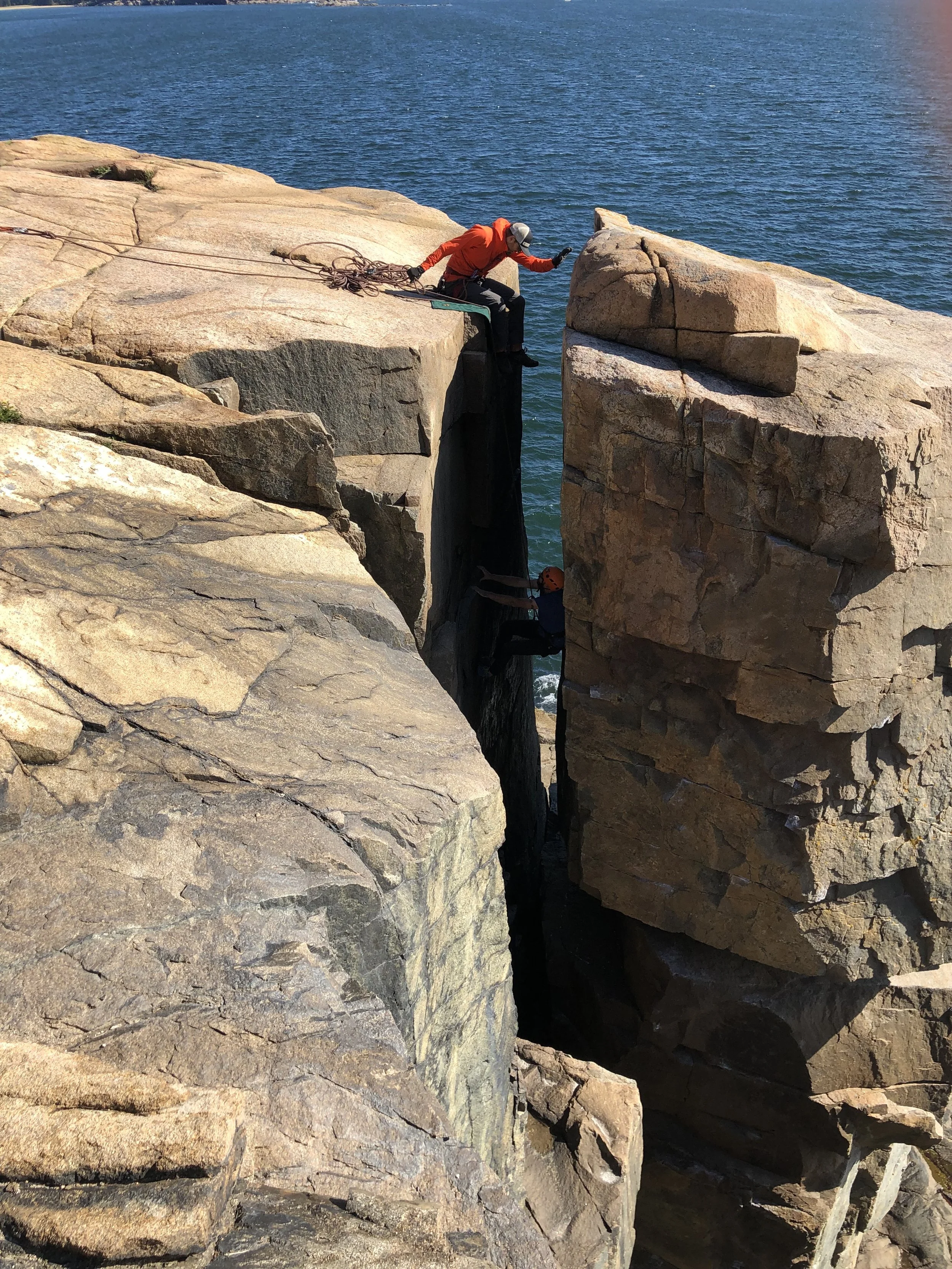
Otter Cliffs (Premier Acadia Rock Climbing Area)
Otter Cliffs is the most iconic location for Acadia rock climbing and one of the most unique climbing environments on the East Coast.
This is true sea cliff climbing. Routes rise directly above the Atlantic, with waves often breaking just below the base of the climb. The rock is generally solid granite, with a mix of cracks, edges, and slab features. Most routes are traditional, with fixed anchors at the top for lowering or rappelling.
The climbing here spans a wide range of grades, with many routes in the moderate range. This makes it one of the best areas for both experienced climbers and those working with a guide.
Conditions play a major role. Tide and ocean swell can affect access and overall experience. On calm days, the climbing is straightforward. When the ocean is active, the exposure becomes part of the challenge.
For anyone interested in climbing in Acadia, Otter Cliffs is typically the starting point and often the highlight of the trip.
Great Head (Quieter Ocean-Side Climbing in Acadia)
Great Head offers a similar style of climbing to Otter Cliffs but with a quieter and more exploratory feel.
The climbing here is also ocean-side granite, with traditional routes that tend to be slightly less traveled. The cliffs are shorter, and the routes are more spread out, which means you may need to do a bit more route finding.
Because of this, Great Head is often a better fit for climbers who already have some outdoor experience or for guided groups looking to avoid crowds.
The setting is just as dramatic as Otter, with sweeping ocean views and constant exposure. For climbers looking to experience a less crowded side of Acadia rock climbing, this area is an excellent option.
The Precipice (South Wall and Technical Climbing)
The Precipice area on Champlain Mountain is one of the most misunderstood climbing zones in the park.
While the Precipice Trail itself is a well-known ladder hike, the nearby South Wall is a legitimate and high-quality technical climbing area.
This part of Acadia offers:
Steeper and more sustained climbing
Crack and face routes on solid granite
A more traditional “crag” feel compared to sea cliffs
The climbing here is generally more technical and less beginner-friendly than Otter Cliffs. Routes tend to require more route finding, gear placement, and overall experience.
Access is also more complex, and the area is frequently subject to seasonal closures due to peregrine falcon nesting. This is an important factor when planning any trip focused on climbing in Acadia.
When open, the South Wall is one of the best places in the park for experienced climbers looking for something beyond the standard sea cliff experience.
South Bubble (Intro and Top-Rope Climbing Area)
South Bubble serves a different purpose within the Acadia climbing landscape. It is not a major trad climbing destination, but it is one of the most useful areas for instruction and beginner experiences.
The climbing here is:
Shorter and more accessible
Suitable for top-rope setups
Ideal for learning movement and basic systems
Because of the easy access and excellent views over Jordan Pond, this is a common location for guided trips focused on first-time climbers or families.
For those looking to get started with guided climbing in Acadia, South Bubble is often one of the most practical and enjoyable places to begin.
Gorham Mountain and Valley Cove (Secondary Climbing Areas)
There are smaller, less-developed climbing zones around Gorham Mountain and Valley Cove.
These areas offer:
Short, less frequently climbed routes
Limited development compared to major crags
Opportunities for exploration
They are not primary destinations for most climbers, but they can be useful for experienced climbers looking to explore beyond the main areas or for guides managing crowd distribution.
Important Distinction: Ladder Routes vs. Technical Climbing
Several areas in Acadia are often incorrectly described as climbing destinations, including:
Precipice Trail
Beech Cliff Ladder Trail
Jordan Cliffs
These are exposed hiking routes with ladders and scrambling sections, not technical rock climbing.
Clarifying this distinction is important, especially for visitors researching Acadia rock climbing, as it helps set accurate expectations about what requires ropes and technical skills.
How Climbing in Acadia Is Structured
Unlike larger climbing destinations, Acadia is focused and concentrated.
Most technical climbing happens in three primary areas:
Otter Cliffs
Great Head
The Precipice (South Wall, when open)
Other locations play supporting roles, either as instructional areas or smaller, less-developed crags.
For anyone planning a trip, understanding this structure makes it much easier to choose the right objectives and get the most out of climbing in Acadia National Park.
FAQ: Climbing in Acadia
Where is the best climbing in Acadia?
Otter Cliffs is the most popular and accessible area, while the Precipice (South Wall) offers more technical climbing when open.
Is the Precipice Trail a climbing route?
No. The Precipice Trail is an exposed hiking route with ladders. The nearby South Wall is where technical climbing takes place.
Can beginners go rock climbing in Acadia?
Yes. Areas like Otter Cliffs and South Bubble are commonly used for beginner experiences, especially with a guide.
When are climbing areas closed in Acadia?
Some areas, particularly around the Precipice, may close seasonally due to peregrine falcon nesting.